It's Saturday morning, my first real chance to hit the water since leaving for Canada nearly a month ago. I need to get in and breathe! I don't really care where and finally decide on the Grotto. It will be a camera free dive, I don't want to do anything except enjoy the tranquility of being down there.
Standing on the rock ready to stride in I notice the water is calm and the tide very high. Nice, an easy exit too! Time to step off the edge. - (Insert splash here) - Ahhhhhhh the cool refreshing feeling of being submerged, no one around, no worries just my breathing and the sounds of the underwater world.
The dive itself was pretty uneventful. I headed out hole 3 to the outside and ventured down deep enough to feel some narcosis and the effects of depth. Slow, exaggerated movements and breathing - meditation at it's best. As always there were some great photo ops, bristle stars sprawled out on large sea fans, cracks and crevices with light rays bouncing in and out catching my eye here and there. No, I won't let myself go down the road of "should have brought the camera" - back to enjoying the moment, the feeling is difficult to put into words but, I'm at peace, this is my special place and all is good in the world!
As I began to make my way back up towards hole three I stopped to untangle about 30 feet of fishing line from some pristine coral. It takes some time, I was deep so the deco clock starts to add up. No worries I have plenty of air and hanging out at 30 feet near the mooring line turns out to be the most unbelievable part of my dive.
Here the tranquility abruptly comes to an end and I am left to reflect, in complete disbelief, on what I've just witnessed!
It began as any other safety stop, a group of divers beginning their descent down the mooring line with the instructor the first one down. While hovering a little deeper than the oncoming bodies he used hand signals to ask those who followed if they where ok. He began to motion the divers over to a rocky ledge next to where I was hanging out so I moved off a ways not wanting to confuse the issue with an extra body. As I watched the group I couldn't help but notice a lot of loose hoses. Everyone, including the instructor, had their octopus and air gauges hanging free rather than clipped or tucked into their BCD. It also became apparent pretty quickly that this was a very large group with none of the divers seemingly all that skilled. There was plenty of hand flailing, erratic fin movements, wide eyes and even a few rapid descents followed by vigorous kicks toward the surface and renewed attempts to equalize ears. All the divers seemed to be very much over weighted.
As I watched I began to count. Sixteen divers in total not counting the instructor. I also notice that all have gloves on and 10 of the 16 have cameras, many frantically trying to snap pictures as they descend to the meeting area. Here the instructor, now also with a camera, is arranging the group on the bottom with hole three in the background - the perfect photo op!
Imagine a pyramid of divers, those on the bottom destroying whatever may be there while the others attempt to hover above without whacking their tanks, fins or gauges on the heads below. At this point a final diver comes in from the top just in time to take up a horizontal position along the bottom row. Perhaps this could be a second instructor or divemaster but I can't tell for sure. The instructor with the camera begins to snap away. The photographer in me recognized the problem immediately - bubbles, bubbles everywhere especially directly in front of those not on the bottom of the pyramid. Apparently the instructor also recognized the issue as he scribbled on a slate and swam to the group showing it to them all. Soon the bubbles stopped, everyone was now holding their breath. The instructor quickly returned to his position and managed to snap a few shots before the inevitable exhalations began.
At this point the instructor seemed to signal to the group to swim in the area around the mooring line and so they began to disperse. The one I thought could be another instructor took up a position next to another diver and did not leave her side. Perhaps they were only a buddy team after all.
For a moment I thought - OK, it's just one big photo op and now they'll get to do a "dive" in the shallows before returning to the surface. No major harm done right, a big group just wanting to get a photo inside the grotto before heading back to Japan - wrong!
Just as I was giving the instructor the benefit of the doubt he turned and headed towards hole number two, the deepest of the three it bottoms out at over 80 feet. All sixteen customers followed. As they moved away form where I was the expanse of hole two filled up with divers. For a moment a couple of them obviously had problems as they headed up towards the ceiling of the cave before slowly returning to the bottom all the while the instructor continued out towards the open ocean never really looking back at his group.
Now I wished more than ever that I had my camera. I could not believe what I was seeing. Even if there was a second instructor in the group that's still an instructor to customer ratio of 8:1. And these were definitely not seasoned divers with plenty of experience. These were novice divers at best. I'd even hazard to guess that a few of them were on their second or third open water dive EVER. Gauges everywhere, nearly vertical swimming techniques caused by too much weight, an overhead environment and a maximum depth of well over 60 feet, not to mention holding their breath for the photo op.......
WTF. I mean seriously, peoples lives are at stake! Then of course there's the fact that another death at the Grotto is not something our tourism industry needs to deal with. By now if you're like me you're probably asking what dive shop? Who was this guy working for and how did he become an instructor? The answer, Blue Horizon Diving an NMDOA affiliated dive shop and I don't know.
I waited in the parking lot long enough to determine the shop and to see that everyone made it back ok, - this time. Next time everyone may not be so lucky. I would have loved to have pulled the instructor aside and started the conversation by saying WTF but, I thought better of it only because in the eyes of his customers he had done nothing but show them a good time.
Tomorrow I'll be headed down for a chat with the VP of NMDOA as they tout themselves as an organization with tough standards for all their members. I'm interested to hear what steps will be taken to ensure this spectacle does not happen again.
Showing posts with label Diver Code of Ethics. Show all posts
Showing posts with label Diver Code of Ethics. Show all posts
Sunday, April 13, 2008


Tuesday, February 5, 2008
Catch of the Day - Saipan’s Napoleon wrasse controversy!
A couple of weeks ago, local award-winning, free diving spear fisherman Felix Sasamoto was able to catch and haul out of the water a 100-plus pound Terminal Phase (TP) Napoleon wrasse and a slightly smaller Intermediate Phase (IP) one a few days later. The Saipan Tribune has reported two stories, one here and one here.
 Photo from Saipan Tribune.
If you're not familiar with the Napoleon wrasse, or Humphead wrasse as it is often called, I’ll refer you to a couple of online sites from which much of the information I present here is obtained.
Most of what is on wikpedia seems in line with other sites and texts I've looked at. A good marine reference site I use is Fishbase and I have also found the links to these stories useful.
From PBS the Trade in Live Reef Fish for Food – Part 1 and part 2 as well as this Odyssey transcript log. The International Union for the Conservation of Nature and Natural Resources (or World Conservation Union) Red list page (aka IUCN Red list) is also very informative.
 First of all let's be clear - those are a couple of big ass fish and no matter how you feel on the issue of whether or not they should have been taken, you must admit that doing so was quite a feat. To dive 50-plus feet on a single breath of air, hunt it down, shoot it and bring it to the surface after the struggle is impressive and is not something the average human can do these days. My hat goes off to Felix and his ability to catch fish, especially big fish, in this way.
Also as Mike Trianni, the Fisheries Manager at DFW has said, Felix has not broken any laws. He was not using SCUBA to fish which is illegal in the CNMI and he was not fishing in a marine protected area (MPA). Nor was he using any of the nets currently banned.
So what’s the controversy?
It’s economics, sustainability, a way of life and the “Teddy Bear” effect.
According to the IUCN Red list assessment in 2004, the Napoleon wrasse is an endangered species. It appears in Appendix II of the CITES (the Convention on International Trade in Endangered Species of Wild Fauna and Flora). This list includes species that are not necessarily now threatened with extinction but that may become so unless trade is closely controlled.
A few other facts….
 Photo from PBS Odyssey log
The Napoleon wrasse is a magnificent fish. The largest of the wrasses, it can grow to a length of over seven feet, weigh in excess of four hundred pounds and live for more than 30 years.
In Asia, Napoleon wrasses are sought after for their meat. A Napoleon wrasse the size of a dinner plate can fetch more than US$1,000. The large fleshy lips are considered a delicacy and are highly sought after with an average asking price of over $300.
Terminal phase males breed with a harem or a small group of females. The supermale is territorial which means it remains in the same location over time and protects the area and the females there too. When the supermale dies a female becomes a male and replaces it. This ensures there is always the ability to reproduce and a continuous opportunity for divers to interact with large inquisitive fish only inches away from their mask.
The reproductive cycle is poorly understood. Overall its resilience is considered low with a minimum population doubling time of 4.5 - 14 years.
They cannot yet be bred in captivity. Not a single Napoleon wrasse has ever spawned in captivity and the outlook for aquaculture is not encouraging.
Its primary foods are mollusks, fishes, sea urchins, crustaceans, and other invertebrates. The Napoleon wrasse is one of the few predators of toxic animals such as sea hares, boxfishes and crown-of-thorns starfish (COTS).
 Although the Napoleon wrasse is one of the largest reef fish, it is usually easily scared off. In a few places around the world however, individuals, often older specimens, have become quite well known and are visited regularly by divers. Usually after a period of feeding, bonds are formed with individual divers whom the wrasse recognize and seek out. These 'friendly' fish often appear as soon as divers enter the water and choose to spend the entire dive with them, even allowing divers to touch them.
Here's a quote from the Odyssey captain in the Maldives. (This I can absolutely relate to as I have had similar experiences in places like Palau and Yap).
“Then I noticed, amongst the backdrop of wonderfully colored fan corals, the charismatic Napoleon Wrasse, who had an air of grandeur and splendor about him making the dive complete before it even started."
“Looking into his eyes and interacting with this wild and gentle fish was one of the most moving experiences I have ever had. This was an animal very much aware of our presence. When no one was petting him, he would maneuver around the group, giving the closest person a gentle nudge or a brush, perhaps to remind us that he still required our attention”
A clip from youtube… of the Maldives Napoleon.
So what does this all mean to the CNMI?
In the eyes of the law Felix did nothing wrong. With the Saipan economy on the ropes, the argument that catching a fish like this is not only necessary for survival for some but also a right of the people prevails. Unfortunately, this type of attitude is shortsighted and ultimately bad for the economy and the population as a whole for many reasons. In the end, it is potentially devastating to future generations of people in that they may never get a chance to see or eat one of these charismatic, tasty fish.
In defending the catch it is also fairly easy to look to the past when fishing pressures here were far greater than they are today and to take solace in the fact that “it used to be worse”.
About 4 or 5 years ago the CNMI banned spear fishing with the aid of SCUBA gear. As Mr. Trianni has pointed out, we are the only area in this part of the world that has done this and in so doing we have effectively created a depth-dependent marine protected area. Other than a few exceptional individuals like Felix, it is pretty hard to catch these guys in their normal habitat.
In an email to me, Felix recounted how the commercial SCUBA fishing industry here once had 4 companies each harvesting as many as 2-5 Napoleon wrasse a day! This fact and the extended time required for this species to recover goes a long way in explaining why, after 5 years of diving here, I can only recount a handful of sightings of Terminal phase males. None of which were too interested in getting to know me or allowing me to capture more than a fleeting moment on camera.
Felix also suggested that this practice of using SCUBA, although reduced, still continues today. In defense of Felix he is quite correct in saying that the agencies tasked to do so should be more concerned with those individuals harvesting illegally than with him. That comes down to enforcement and as anyone who has lived here knows - that is a whole other story on which I will not digress!
Economics.
Until such time when the Napoleon wrasse is common in our waters the overall economic benefit to the island is far greater with them alive, swimming on our reefs, than dead in a market. This would be especially true if the territorial Terminal males were protected at popular dive spots. The idea being that with time the resident male would become one of those “friendly” fish for photographers and videographers to capture endlessly over and over again.
In this scenario the economic benefits to everyone are drastic and must be broken down into two categories. First the more obvious benefits of direct revenues from diving activities including tourists renting gear and traveling to dive with Saipan’s gentle giants. The second, perhaps less obvious form of revenue the island would benefit from, revolves around branding and advertising. This can best be summed up with what I’ll call the “Teddy Bear Effect”. You just want to reach out and hug these types of animals. It's what the RARE Pride campaign is about.
Encounters with marine life demonstrating “personality” and “charisma” are memorable and sought after by divers. These encounters turn into memories that linger with you for a lifetime, entering your conscious mind during times of reflection and ultimately they bring you back to that pin in the map.
To a tourism industry they are that 30-second Super Bowl ad that’s worth a million or so dollars a second to air. But, unlike those make believe commercials, these are real experiences that stick with you forever. They barely lose the emotional intensity invoked at the time. In other words they put a destination on the map and they keep it there. Done right, a single image, in this case a Napoleon wrasse with a diver, shouts to the rest of the diving world – Palau, Maldives, Saipan……
I still get goose bumps when I tell people about some of my most memorable dives and I never have trouble recounting where I was at the time. Memories of dives petting a grouper, looking into the eyes of a curious fish twice your size or being surrounded by a pod of dolphins are among those that never fade. And when someone asks you... Where was that? There's no hesitation – Imagine if we could say Saipan and the response was… Hey isn’t that where they have the Eagle Rays, the Grotto and that huge Napoleon named Harry?
Unlike Super Bowl ads, to a tourism industry this type of advertising is provided free of charge by Mother Nature. It is ours to utilize and maintain or ours to destroy. If it is destroyed only memories remain in the minds of the living and in the images produced by those privileged enough to capture them on film.
If we choose preservation then in a situation where the Napoleon wrasse is prevalent and protected (with limited harvesting dependent on sound numbers) even the fisherman benefit. Hopefully in some direct way from the overall improvement of the economy but, also because the species is actually around in numbers that will allow some sort of harvest and profits from the catch without risking sustainability.
At the moment this situation does not exist here and although Mr. Trianni points out that the species is not rare but uncommon here the numbers are still low and I am not aware of any dive sites where Terminal males approach divers fearlessly.
Therefore, I think it would make a lot of sense to do what is necessary now to ensure that this fish has the best chance possible to become common in our waters. Yes, we can point to successes in the past like the banning of scuba spear fishing (by all accounts the numbers are improving) but doing more now could pay even bigger dividends down the road especially if the Napoleon becomes extinct in other areas. This would of course make our destination that much more attractive to the customers of a profitable sustainable dive industry.
So while I don’t believe Felix should be persecuted for his catch, I am also saddened by it and believe that with the bigger picture in mind he should not have taken these fish especially because they inhabited a very popular dive spot. Given time, their territorial nature, long life spans and ability to lose fear of humans could have made them permanent fixtures at Obyan and ultimately in photos distributed around the world with the strongest form of advertising around - word of mouth.
I respect his abilities greatly and would hope that the agencies with the power to do so will take his advice and pursue those fishing illegally and, if deemed necessary, develop legislative action to protect these animals further in some way. This could be as simple as designating certain sites like Obyan, Lau Lau and Ice Cream as no take zones and enforcing the rules. The spill over effect will benefit everyone for generations to come.
On an aside note I also find it interesting that the Napoleon wrasse is a known predator of the crown of thorns starfish. Of course other predators such as the triton trumpet also exist and they have their own controversies here in the CNMI. I’ve heard on occasion from individuals in some of the agencies that many feel the COTS are a problem here. I don’t believe this to be the case but, hypothetically speaking, if it is then wouldn’t it also make sense to further protect the Napoleon allowing mother nature to take care of the COTS?
One last quote from the Odyssey in the Maldives – Man I want to go there!
"Protection of reef fish species will further develop eco-tourism. This is already happening in the Maldives where the country's main income is derived from the tourist dollar. Tourists will pay a lot to dive on protected reefs where they can have memorable interactions with charismatic but increasingly rare, large grouper and wrasse".
 Photo from Saipan Tribune.
If you're not familiar with the Napoleon wrasse, or Humphead wrasse as it is often called, I’ll refer you to a couple of online sites from which much of the information I present here is obtained.
Most of what is on wikpedia seems in line with other sites and texts I've looked at. A good marine reference site I use is Fishbase and I have also found the links to these stories useful.
From PBS the Trade in Live Reef Fish for Food – Part 1 and part 2 as well as this Odyssey transcript log. The International Union for the Conservation of Nature and Natural Resources (or World Conservation Union) Red list page (aka IUCN Red list) is also very informative.
 First of all let's be clear - those are a couple of big ass fish and no matter how you feel on the issue of whether or not they should have been taken, you must admit that doing so was quite a feat. To dive 50-plus feet on a single breath of air, hunt it down, shoot it and bring it to the surface after the struggle is impressive and is not something the average human can do these days. My hat goes off to Felix and his ability to catch fish, especially big fish, in this way.
Also as Mike Trianni, the Fisheries Manager at DFW has said, Felix has not broken any laws. He was not using SCUBA to fish which is illegal in the CNMI and he was not fishing in a marine protected area (MPA). Nor was he using any of the nets currently banned.
So what’s the controversy?
It’s economics, sustainability, a way of life and the “Teddy Bear” effect.
According to the IUCN Red list assessment in 2004, the Napoleon wrasse is an endangered species. It appears in Appendix II of the CITES (the Convention on International Trade in Endangered Species of Wild Fauna and Flora). This list includes species that are not necessarily now threatened with extinction but that may become so unless trade is closely controlled.
A few other facts….
 Photo from PBS Odyssey log
The Napoleon wrasse is a magnificent fish. The largest of the wrasses, it can grow to a length of over seven feet, weigh in excess of four hundred pounds and live for more than 30 years.
In Asia, Napoleon wrasses are sought after for their meat. A Napoleon wrasse the size of a dinner plate can fetch more than US$1,000. The large fleshy lips are considered a delicacy and are highly sought after with an average asking price of over $300.
Terminal phase males breed with a harem or a small group of females. The supermale is territorial which means it remains in the same location over time and protects the area and the females there too. When the supermale dies a female becomes a male and replaces it. This ensures there is always the ability to reproduce and a continuous opportunity for divers to interact with large inquisitive fish only inches away from their mask.
The reproductive cycle is poorly understood. Overall its resilience is considered low with a minimum population doubling time of 4.5 - 14 years.
They cannot yet be bred in captivity. Not a single Napoleon wrasse has ever spawned in captivity and the outlook for aquaculture is not encouraging.
Its primary foods are mollusks, fishes, sea urchins, crustaceans, and other invertebrates. The Napoleon wrasse is one of the few predators of toxic animals such as sea hares, boxfishes and crown-of-thorns starfish (COTS).
 Although the Napoleon wrasse is one of the largest reef fish, it is usually easily scared off. In a few places around the world however, individuals, often older specimens, have become quite well known and are visited regularly by divers. Usually after a period of feeding, bonds are formed with individual divers whom the wrasse recognize and seek out. These 'friendly' fish often appear as soon as divers enter the water and choose to spend the entire dive with them, even allowing divers to touch them.
Here's a quote from the Odyssey captain in the Maldives. (This I can absolutely relate to as I have had similar experiences in places like Palau and Yap).
“Then I noticed, amongst the backdrop of wonderfully colored fan corals, the charismatic Napoleon Wrasse, who had an air of grandeur and splendor about him making the dive complete before it even started."
“Looking into his eyes and interacting with this wild and gentle fish was one of the most moving experiences I have ever had. This was an animal very much aware of our presence. When no one was petting him, he would maneuver around the group, giving the closest person a gentle nudge or a brush, perhaps to remind us that he still required our attention”
A clip from youtube… of the Maldives Napoleon.
So what does this all mean to the CNMI?
In the eyes of the law Felix did nothing wrong. With the Saipan economy on the ropes, the argument that catching a fish like this is not only necessary for survival for some but also a right of the people prevails. Unfortunately, this type of attitude is shortsighted and ultimately bad for the economy and the population as a whole for many reasons. In the end, it is potentially devastating to future generations of people in that they may never get a chance to see or eat one of these charismatic, tasty fish.
In defending the catch it is also fairly easy to look to the past when fishing pressures here were far greater than they are today and to take solace in the fact that “it used to be worse”.
About 4 or 5 years ago the CNMI banned spear fishing with the aid of SCUBA gear. As Mr. Trianni has pointed out, we are the only area in this part of the world that has done this and in so doing we have effectively created a depth-dependent marine protected area. Other than a few exceptional individuals like Felix, it is pretty hard to catch these guys in their normal habitat.
In an email to me, Felix recounted how the commercial SCUBA fishing industry here once had 4 companies each harvesting as many as 2-5 Napoleon wrasse a day! This fact and the extended time required for this species to recover goes a long way in explaining why, after 5 years of diving here, I can only recount a handful of sightings of Terminal phase males. None of which were too interested in getting to know me or allowing me to capture more than a fleeting moment on camera.
Felix also suggested that this practice of using SCUBA, although reduced, still continues today. In defense of Felix he is quite correct in saying that the agencies tasked to do so should be more concerned with those individuals harvesting illegally than with him. That comes down to enforcement and as anyone who has lived here knows - that is a whole other story on which I will not digress!
Economics.
Until such time when the Napoleon wrasse is common in our waters the overall economic benefit to the island is far greater with them alive, swimming on our reefs, than dead in a market. This would be especially true if the territorial Terminal males were protected at popular dive spots. The idea being that with time the resident male would become one of those “friendly” fish for photographers and videographers to capture endlessly over and over again.
In this scenario the economic benefits to everyone are drastic and must be broken down into two categories. First the more obvious benefits of direct revenues from diving activities including tourists renting gear and traveling to dive with Saipan’s gentle giants. The second, perhaps less obvious form of revenue the island would benefit from, revolves around branding and advertising. This can best be summed up with what I’ll call the “Teddy Bear Effect”. You just want to reach out and hug these types of animals. It's what the RARE Pride campaign is about.
Encounters with marine life demonstrating “personality” and “charisma” are memorable and sought after by divers. These encounters turn into memories that linger with you for a lifetime, entering your conscious mind during times of reflection and ultimately they bring you back to that pin in the map.
To a tourism industry they are that 30-second Super Bowl ad that’s worth a million or so dollars a second to air. But, unlike those make believe commercials, these are real experiences that stick with you forever. They barely lose the emotional intensity invoked at the time. In other words they put a destination on the map and they keep it there. Done right, a single image, in this case a Napoleon wrasse with a diver, shouts to the rest of the diving world – Palau, Maldives, Saipan……
I still get goose bumps when I tell people about some of my most memorable dives and I never have trouble recounting where I was at the time. Memories of dives petting a grouper, looking into the eyes of a curious fish twice your size or being surrounded by a pod of dolphins are among those that never fade. And when someone asks you... Where was that? There's no hesitation – Imagine if we could say Saipan and the response was… Hey isn’t that where they have the Eagle Rays, the Grotto and that huge Napoleon named Harry?
Unlike Super Bowl ads, to a tourism industry this type of advertising is provided free of charge by Mother Nature. It is ours to utilize and maintain or ours to destroy. If it is destroyed only memories remain in the minds of the living and in the images produced by those privileged enough to capture them on film.
If we choose preservation then in a situation where the Napoleon wrasse is prevalent and protected (with limited harvesting dependent on sound numbers) even the fisherman benefit. Hopefully in some direct way from the overall improvement of the economy but, also because the species is actually around in numbers that will allow some sort of harvest and profits from the catch without risking sustainability.
At the moment this situation does not exist here and although Mr. Trianni points out that the species is not rare but uncommon here the numbers are still low and I am not aware of any dive sites where Terminal males approach divers fearlessly.
Therefore, I think it would make a lot of sense to do what is necessary now to ensure that this fish has the best chance possible to become common in our waters. Yes, we can point to successes in the past like the banning of scuba spear fishing (by all accounts the numbers are improving) but doing more now could pay even bigger dividends down the road especially if the Napoleon becomes extinct in other areas. This would of course make our destination that much more attractive to the customers of a profitable sustainable dive industry.
So while I don’t believe Felix should be persecuted for his catch, I am also saddened by it and believe that with the bigger picture in mind he should not have taken these fish especially because they inhabited a very popular dive spot. Given time, their territorial nature, long life spans and ability to lose fear of humans could have made them permanent fixtures at Obyan and ultimately in photos distributed around the world with the strongest form of advertising around - word of mouth.
I respect his abilities greatly and would hope that the agencies with the power to do so will take his advice and pursue those fishing illegally and, if deemed necessary, develop legislative action to protect these animals further in some way. This could be as simple as designating certain sites like Obyan, Lau Lau and Ice Cream as no take zones and enforcing the rules. The spill over effect will benefit everyone for generations to come.
On an aside note I also find it interesting that the Napoleon wrasse is a known predator of the crown of thorns starfish. Of course other predators such as the triton trumpet also exist and they have their own controversies here in the CNMI. I’ve heard on occasion from individuals in some of the agencies that many feel the COTS are a problem here. I don’t believe this to be the case but, hypothetically speaking, if it is then wouldn’t it also make sense to further protect the Napoleon allowing mother nature to take care of the COTS?
One last quote from the Odyssey in the Maldives – Man I want to go there!
"Protection of reef fish species will further develop eco-tourism. This is already happening in the Maldives where the country's main income is derived from the tourist dollar. Tourists will pay a lot to dive on protected reefs where they can have memorable interactions with charismatic but increasingly rare, large grouper and wrasse".
Sunday, August 19, 2007
This Makes Me Angry
When I'm underwater not many things bug me but this is always sure to get me a little pissed.
Why do people feel they have to hold on to things especially with gloves and with No current? Why do people have to push off the coral with their fins? Please help to set a good example and instructors especially please bring these infractions to the attention of your students, don't perpetuate it by ignoring it!
Why do people feel they have to hold on to things especially with gloves and with No current? Why do people have to push off the coral with their fins? Please help to set a good example and instructors especially please bring these infractions to the attention of your students, don't perpetuate it by ignoring it!
Wednesday, July 25, 2007
Grotto Memorial
To continue with a train of thought from an earlier post......
I’d been discussing the "2007" rock formation I witnessed on the sand flats about 40 feet below the surface while swimming at Obyan the other day. It got me thinking about the “diver code of ethics”, where we draw the line, mother nature’s destruction versus regeneration and the opportunities for free publicity all at the same time.
I imagined a group of divers (all making the peace sign) hovering over the formation while another with a camera snapped away. It got me thinking about the many dive sites around the world marked with a man made touch. Wreck dives often have small metal plates affixed to their hulls complete with descriptions of the vessel, the date of sinking and other notable facts. Other sites pay tribute to those who’ve lost their lives while diving with monuments or head stone like structures. In some small way these memorials and inscriptions help provide families the closure needed for often unexplainable, horribly tragic events. They also help serve as reminders, to those who pass, of the vulnerability we all face when entering this often-unforgiving world.
 A diver examines one in a series of plaques marking wreck dives in Florida
 A newly erected monument in Puckett pays tribute to those who perished during the Tsunami.
One thing I've noticed over my years of diving is anytime a diver with a camera comes across such a landmark their shutter button is put into action almost immediately. Unlike marine life, a man made structure of this type is unique only to the spot on which it rests. Snap, snap, snap – the photographer captures a unique, perhaps once in a live time moment at a very specific place underwater.
This got me thinking about the Grotto. First, just how many times a simple underwater plaque situated at the base of the mooring line might be photographed during a safety stop. Of course I had just come off a dive with Harry where I witnessed him take over 400 shots of a nudibranch at 20 feet on the rock anchoring the line. But seriously on a slow day it’s estimated a minimum of 150 divers do a giant stride off the big rock. On a busy day it can be upwards of four to five hundred (this according to the stats kept by the security guards). Now days it is almost becoming unusual to see a group of divers enter the water without at least one having a digital camera attached. Now imagine if nearly all of those divers exited the water with a photograph of themselves beside a plaque that read - The Grotto, Saipan, Northern Mariana Islands, (complete with GPS coordinates). Now that’s effective free publicity and word of mouth advertising at it’s best.
It also got me thinking about the Grotto in terms of those who’ve lost their lives. I do not know exactly how many have met their fate here but at present no monument of any kind, above or below the water, exists to pay respect to these individuals and their families. It seems to me it would be money well spent, especially if those passing by the inscriptions paused to consider and respect the power of Mother Nature and the need to follow safe diving practices especially in a place like the Grotto.
 Check out this story
I’d been discussing the "2007" rock formation I witnessed on the sand flats about 40 feet below the surface while swimming at Obyan the other day. It got me thinking about the “diver code of ethics”, where we draw the line, mother nature’s destruction versus regeneration and the opportunities for free publicity all at the same time.
I imagined a group of divers (all making the peace sign) hovering over the formation while another with a camera snapped away. It got me thinking about the many dive sites around the world marked with a man made touch. Wreck dives often have small metal plates affixed to their hulls complete with descriptions of the vessel, the date of sinking and other notable facts. Other sites pay tribute to those who’ve lost their lives while diving with monuments or head stone like structures. In some small way these memorials and inscriptions help provide families the closure needed for often unexplainable, horribly tragic events. They also help serve as reminders, to those who pass, of the vulnerability we all face when entering this often-unforgiving world.
 A diver examines one in a series of plaques marking wreck dives in Florida
 A newly erected monument in Puckett pays tribute to those who perished during the Tsunami.
One thing I've noticed over my years of diving is anytime a diver with a camera comes across such a landmark their shutter button is put into action almost immediately. Unlike marine life, a man made structure of this type is unique only to the spot on which it rests. Snap, snap, snap – the photographer captures a unique, perhaps once in a live time moment at a very specific place underwater.
This got me thinking about the Grotto. First, just how many times a simple underwater plaque situated at the base of the mooring line might be photographed during a safety stop. Of course I had just come off a dive with Harry where I witnessed him take over 400 shots of a nudibranch at 20 feet on the rock anchoring the line. But seriously on a slow day it’s estimated a minimum of 150 divers do a giant stride off the big rock. On a busy day it can be upwards of four to five hundred (this according to the stats kept by the security guards). Now days it is almost becoming unusual to see a group of divers enter the water without at least one having a digital camera attached. Now imagine if nearly all of those divers exited the water with a photograph of themselves beside a plaque that read - The Grotto, Saipan, Northern Mariana Islands, (complete with GPS coordinates). Now that’s effective free publicity and word of mouth advertising at it’s best.
It also got me thinking about the Grotto in terms of those who’ve lost their lives. I do not know exactly how many have met their fate here but at present no monument of any kind, above or below the water, exists to pay respect to these individuals and their families. It seems to me it would be money well spent, especially if those passing by the inscriptions paused to consider and respect the power of Mother Nature and the need to follow safe diving practices especially in a place like the Grotto.
 Check out this story
Friday, July 20, 2007
Obyan Swim
When I don't have time for a dive but need to get in the water I'll often head down to Obyan beach for a swim.


I like to go out the second cut then right (west) along the reef line to the dive buoy. If you go out a little ways the bottom sand flats are about 40 feet deep and form the outline for the coral fingers extending into deeper water. Looking down you can see the bottom clearly and lots of different characters doing their thing around the coral heads and on the white fluffy sand.
I hate to free dive. I'm not very good at it. I've just always liked the feeling of being able to freely breath off of my regulator at anytime. But I always do at least a few descents just to check out how the visibility looks from below. It can be deceiving looking down at times. Getting to about 30 feet or so and looking horizontally it can look very different in terms of clarity.
I digress from the point I was going to make, it's just nice to put myself back in the head space I was in when I noticed an interesting pile of rocks on the bottom. More likely big chunks of long dead coral, which has, over the years become rounded to look more like small boulders. As I got closer I realized that someone had taken the time to move 20 or 30 of these "rocks" to form the numbers - 2007. The area surrounding the message was clear of any large stones making the scene resemble a message atop a big round birthday cake. Other rocks lay scattered outside the perimeter of the cleared area and were spared any man made movement. As I approached I couldn't help but think of another Diver Code of Ethics post.
I imagine someone, or more likely a group of divers, had taken the time to add a small date stamp to their underwater photos. Likely these divers were tourists and wanted something to show friends and family back home and should their memories ever begin to fail them they will always know what year they dove Saipan. This is not unusual practice for tourists. I've worked in many dive resorts around the world and consistently you will have one group or another show up for a week of diving with a banner or set of T-shirts that everyone affiliated with the group wants their picture taken with underwater. It makes for a great souvenir and even some publicity for the group when they return home. A picture in the local paper, a story about where they were and how Billy Bob got so drunk one night he had to miss the best dive ever......
But as I said that code of ethics thing came into my mind. The whole "where do you draw the line" argument. I'm sure the movement of these rocks disrupted a few lively hoods on the sandy bottom. The Red-banded Shrimpgobys and their blind Alpheid shrimp workers like to use these types of rocks to build their homes and Bluesteak gobies often burrow their own condos with these rocks providing at least one side for protection. So how many homes were disturbed by the making of the sign? How many from the divers fins when they all settled on the bottom for the picture? The answer - probably some but probably far less than those who had to do repairs or find new homes altogether after the recent storm (Man-yi) passed. Fact is Mother Nature often deals the reef much more of a blow than divers do. As with wild fires some destruction from time to time is necessary for new colonies to take route etc. But in this case the message (and possible destruction) was man made!
But then I thought so is this.....

 Where do you draw the line? More to this train of thought but that's all the time I have for now. I must set up the camera for tomorrows dive! Stay tuned.


I like to go out the second cut then right (west) along the reef line to the dive buoy. If you go out a little ways the bottom sand flats are about 40 feet deep and form the outline for the coral fingers extending into deeper water. Looking down you can see the bottom clearly and lots of different characters doing their thing around the coral heads and on the white fluffy sand.
I hate to free dive. I'm not very good at it. I've just always liked the feeling of being able to freely breath off of my regulator at anytime. But I always do at least a few descents just to check out how the visibility looks from below. It can be deceiving looking down at times. Getting to about 30 feet or so and looking horizontally it can look very different in terms of clarity.
I digress from the point I was going to make, it's just nice to put myself back in the head space I was in when I noticed an interesting pile of rocks on the bottom. More likely big chunks of long dead coral, which has, over the years become rounded to look more like small boulders. As I got closer I realized that someone had taken the time to move 20 or 30 of these "rocks" to form the numbers - 2007. The area surrounding the message was clear of any large stones making the scene resemble a message atop a big round birthday cake. Other rocks lay scattered outside the perimeter of the cleared area and were spared any man made movement. As I approached I couldn't help but think of another Diver Code of Ethics post.
I imagine someone, or more likely a group of divers, had taken the time to add a small date stamp to their underwater photos. Likely these divers were tourists and wanted something to show friends and family back home and should their memories ever begin to fail them they will always know what year they dove Saipan. This is not unusual practice for tourists. I've worked in many dive resorts around the world and consistently you will have one group or another show up for a week of diving with a banner or set of T-shirts that everyone affiliated with the group wants their picture taken with underwater. It makes for a great souvenir and even some publicity for the group when they return home. A picture in the local paper, a story about where they were and how Billy Bob got so drunk one night he had to miss the best dive ever......
But as I said that code of ethics thing came into my mind. The whole "where do you draw the line" argument. I'm sure the movement of these rocks disrupted a few lively hoods on the sandy bottom. The Red-banded Shrimpgobys and their blind Alpheid shrimp workers like to use these types of rocks to build their homes and Bluesteak gobies often burrow their own condos with these rocks providing at least one side for protection. So how many homes were disturbed by the making of the sign? How many from the divers fins when they all settled on the bottom for the picture? The answer - probably some but probably far less than those who had to do repairs or find new homes altogether after the recent storm (Man-yi) passed. Fact is Mother Nature often deals the reef much more of a blow than divers do. As with wild fires some destruction from time to time is necessary for new colonies to take route etc. But in this case the message (and possible destruction) was man made!
But then I thought so is this.....

 Where do you draw the line? More to this train of thought but that's all the time I have for now. I must set up the camera for tomorrows dive! Stay tuned.
Thursday, July 19, 2007
Triton Update
An Update on the Triton Trumpet story. Bree has now removed her original post (as did Harry) comments and all so the links in the story below make no sense. Fortunately the information about the ecology of the Triton and hermit crab relationship has been posted on the BCNMI website. This time I’ve bookmarked the references just in case someone decides to pull that post too! And just for clarification (for anyone jumping into this part way through - Bruce) the post on BCNMI is quite different than the original so if you're reading it wondering why Harry was upset - well, it won't make sense. It does bring up a blogger ethical question as Angelo suggested in a comment to Harry when this all started.
(Note, in no way shape or form has Angelo given me permission to use his comment here)
"Harry, your blog is one of the best on the island. It would be a shame if you stopped posting your pictures and stories of diving.
Your so called controversial post got a lot of people talking about blogging ethics, diving, and so on.
I think those are good conversations to have.
I wouldn't delete that post; Leave it up. Write about your reactions to that post.
That makes for a good read.
On a side note, although you claim that you no longer want to blog, a few of us noticed that you've still managed to write four posts today.
Keep up the good work."
Ultimately having the conversation about this (diver & blogger ethics) will help educate a lot of people and if the only thing that comes of it is a proper road and drainage system for Lau Lau bay then.... - What?
That's right, somewhere in all the comments someone (I can't remember were I saw it) said a couple of crabs loosing their homes has far less impact than the raging river of water I walked through coming up the beach from a dive a few days ago. Educating more folks about the underwater world and the ramifications of our actions on land is always a good thing even if it's little steps at a time!
(Note, in no way shape or form has Angelo given me permission to use his comment here)
"Harry, your blog is one of the best on the island. It would be a shame if you stopped posting your pictures and stories of diving.
Your so called controversial post got a lot of people talking about blogging ethics, diving, and so on.
I think those are good conversations to have.
I wouldn't delete that post; Leave it up. Write about your reactions to that post.
That makes for a good read.
On a side note, although you claim that you no longer want to blog, a few of us noticed that you've still managed to write four posts today.
Keep up the good work."
Ultimately having the conversation about this (diver & blogger ethics) will help educate a lot of people and if the only thing that comes of it is a proper road and drainage system for Lau Lau bay then.... - What?
That's right, somewhere in all the comments someone (I can't remember were I saw it) said a couple of crabs loosing their homes has far less impact than the raging river of water I walked through coming up the beach from a dive a few days ago. Educating more folks about the underwater world and the ramifications of our actions on land is always a good thing even if it's little steps at a time!
Wednesday, July 18, 2007
A little controversy in the underwater world here on Saipan.
Well I can’t very well call this the Saipan Scuba diving blog without weighing in on the Tritan Trumpets shell controversy. Problem is I’m one of those people that take forever to write even a simple email. A full post covering all the issues this topic generates would take me days to write. A logical question would be why am I entering the blogging world in the first place if writing takes so long. Good question! My intention has been to tell the story with images. To this point I have fallen short of offering regular Underwater video segments but that will soon change as I’ve finally determined the work flow I intend to use for importing and cataloging over 25 hours of underwater footage. No easy task and this does not include destinations outside the CNMI. So soon my entry into the blogging world may become a little more regular and a little more fun.
I’m off track already! For those not following the Tritan Trumpets shell controversy a short recap and links to the blogs involved is in order. Basically Harry, an avid longtime diver, shell collector and recent newcomer to the world of Underwater photography posted an entry and photos describing how he found and evicted two hermit crabs from their residences (the Tritan Trumpet) during a night dive at Lau Lau Bay. In response Bree, whom I do not know personally, but from all accounts is a shining light when it comes to educating the students here, used Harry’s pictures to post an objection to his actions and to provide well-researched rationale as to why such action may be looked upon as unfavorable or even as detrimental to the critters involved.
From there, well you’ll need to read the comments and the follow-up posts but for me this becomes an issue of respect. Respect not only for the marine environment but also respect for each other and respect for the limitations and power of the blogging world.
First, when I read Harry’s original post (now removed) I was fuming! I even asked my wife - what am I going to do - I love Harry’s blog, his posts are fascinating and he brings the diving world to people in a way I can only dream of. But, on the other hand, I have been a dive instructor for over 12 years and have always stood up for the creatures that can’t do it for themselves. At times, nearly losing my job. As an instructor, you learn very quickly that actions speak so much more loudly than words and that your actions can influence a life of diving, not just a single experience. In her wisdom my wife suggested I talk to Harry the next day so I could go to bed rather than stay up till 3AM agonizing over writing a post! A good idea - I agreed.
The next day I was both happy and concerned. Happy because someone had thoroughly researched the ecology and relationships between these critters and this information would help illustrate many of the things I hoped to discuss with Harry. Concerned because, for reasons Harry has expressed, he was unsure if he would continue to blog. The thought of not being able to read his stories, well, I didn’t want that to happen. I love his blog!
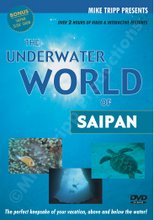
At this point I patted myself on the back for marrying such a smart gal and decided to call Harry and hopefully go for a beer. It was just after I released the Underwater World of Saipan DVD in October that I realized Harry was such a big diver. Since then we have had brief conversations at various meetings, they always turn to diving usually with each of us suggesting we go for a dive but to this point it hasn’t happened. This beer was long over due!
Nearly two and a half hours later, we had touched upon almost every aspect of life here on Saipan and even some diving too! I will preface any summarization of our conversation with suggesting that it is well worth the price of a glass of wine (Harry's choice, mine's a FAMB)to hear this self-confessed diving dinosaur recount a dive tale or two first hand! Talking about diving for me (and as I have learned for Harry) is the exact opposite to my difficulty and dislike for writing so I could go on and on…..
But as I said this for me this is about respect.
First, as an educator, one of the most important things to assess is where the student lies in their understanding of the concepts or principles about to be taught and that no one ever likes to be wrong or publicly humiliated. Doing so prevents any concept from ever being accepted.
Second, as a result of their life experiences and beliefs, what may seem obvious to one person may not be so obvious to another and that beliefs can only be changed through education and the resulting paradigm shift.
Very early into our conversation it became clear to me that Harry had missed out on the “environmental code of ethics” making its way into diver education courses over the past decade. (This is not limited to PADI) Dive programs continue to evolve today, the debate as to how much training and what type of training is required to safely dive has been ongoing for years. The fact is when Harry learned to dive, requirements needed to pass the course and the attitude towards the environment in general was very different than it is today. Many years ago you had to, among other things, jump into the deep end of a pool with no gear on, dive down to the bottom and don a set of equipment (in no way shape or form resembling today’s stuff) then ascend safely to the surface before passing the course. Project AWARE, PADI’s arm of the reef protection movement, didn’t exist and nearly all divers were male! A lot has changed.
Couple that with Harry’s obsession for shells (which he admits is now taking a back seat to the photographs) and you can begin to see why his actions on the night dive did not seem like a big deal to him. I’m not making excuses, I’m just determining the facts. It also became clear to me that he had reviewed the references in Bree’s post and that this information alone had already given him cause to think about how people interact with marine life and given the opportunity to take another Tritan in the same manner, he would likely pass.
So what is the diving code of ethics! Different things for different folks but….
Generally, passive participation in the marine world is the diving method of choice. Being unobtrusive, sitting back and watching the action not only prevents any harm to the animal but to the human as well and offers the best opportunity for an extended observation of the organism in its natural state. This is not to say that some animals cannot be touched or handled in a responsible, non-harmful way but such encounters are grounded in the diver’s knowledge of which species can tolerate such contact. Without knowledge the negative affects of such encounters are often not manifested until well after the encounter has occurred.(1) In other words, if you don’t know what it is or how your interaction will ultimately affect the species, don’t touch it! If you’re not sure of a reproductive cycle, a habitat requirement or anything else about it, observe and move on.
Again, respect, we are in their world. Imagine this big creature coming into your living room and rubbing you up and down with large rough cloth or taking you out of your home all together. Most people (other than Angelo) probably would not take to kindly to it but in fact this is exactly what every diver who wears gloves for protection is doing when they touch something underwater. Gloves remove protective mucus from coral and other organisms leaving them prone to disease and death. It seems to me nearly every dive shop on this island issues their divers wet suits and gloves. The water is 86 degrees. One of the reasons I live here is that I can dive and my hands never get cold. In fact, I’ve worn a wet suit twice in nearly 5 years. So why do people need gloves and a wet suit – for protection. Not to protect the coral or marine life but to compensate for bad instruction and inappropriate interactions with the reef. If every instructor said No to gloves, students would learn very quickly that touching things is not a good idea. Put gloves on them and do the same yourself and they will never know, propagating the negative effects of gloves multiple times over for years to come. Set a good example and see the opposite result, the formation of an environmental champion in a diver with good buoyancy.
For me this was the issue I had with Harry’s post. Not so much that he evicted the crabs but because with his blog and his status in the community as a radio personality and a diving nut (I mean that in a good way) he has the ability to influence divers especially new ones. Although I have seen people do things underwater far worse than what these crabs experienced, I didn’t want anyone thinking that this type of interaction was ok because it’s just too easy to propagate the attitude and often very difficult to change it. Divers offer a unique perspective to the cause of environmentalism and often are at the forefront of conservation because they are taught (hopefully) that the ecosystem is not well understood and that our actions, whether diving or not, do have a profound effect on its health. It’s my hope that Harry will help with that cause because if divers don’t do it, no one will and I know a lot of divers are reading Harry’s world. By the way, did anyone notice that after an entire weekend of fishing the recently completed Saipan derby netted only 3 Marlin! Why? The reasons are likely much more complex than anyone really knows but what if a few hundred divers touching the reef with gloves and a few years of shell collecting did alter the food chain in some way. I realize it’s far-fetched but my point is we just don’t know so we should limit the things we can control and be passive, gloveless divers!
Respect the blog, its power and limitations.
How far reaching will this story go, how many people will relate to it or alter their behaviors one way or another? The Saipan blogger and walt his partner in crime I’m sure would argue that the potential, if it is not already happening, is huge. The problem is they (posts) will never (one should never say never) replace a good ol’ one on one chat. Come to think of it the telephone never really replaced that either. They (2) say communication consists of 7% words, 38% tone and 55% body language. I think we should build Harry’s new bar and put more body into our Saipan Blogging network!
1 PADI Encyclopedia of Recreational Diving
2 My sister-in-law Sue.
PS. I just read Brads post! Well done that’s a good chuckle!
I’m off track already! For those not following the Tritan Trumpets shell controversy a short recap and links to the blogs involved is in order. Basically Harry, an avid longtime diver, shell collector and recent newcomer to the world of Underwater photography posted an entry and photos describing how he found and evicted two hermit crabs from their residences (the Tritan Trumpet) during a night dive at Lau Lau Bay. In response Bree, whom I do not know personally, but from all accounts is a shining light when it comes to educating the students here, used Harry’s pictures to post an objection to his actions and to provide well-researched rationale as to why such action may be looked upon as unfavorable or even as detrimental to the critters involved.
From there, well you’ll need to read the comments and the follow-up posts but for me this becomes an issue of respect. Respect not only for the marine environment but also respect for each other and respect for the limitations and power of the blogging world.
First, when I read Harry’s original post (now removed) I was fuming! I even asked my wife - what am I going to do - I love Harry’s blog, his posts are fascinating and he brings the diving world to people in a way I can only dream of. But, on the other hand, I have been a dive instructor for over 12 years and have always stood up for the creatures that can’t do it for themselves. At times, nearly losing my job. As an instructor, you learn very quickly that actions speak so much more loudly than words and that your actions can influence a life of diving, not just a single experience. In her wisdom my wife suggested I talk to Harry the next day so I could go to bed rather than stay up till 3AM agonizing over writing a post! A good idea - I agreed.
The next day I was both happy and concerned. Happy because someone had thoroughly researched the ecology and relationships between these critters and this information would help illustrate many of the things I hoped to discuss with Harry. Concerned because, for reasons Harry has expressed, he was unsure if he would continue to blog. The thought of not being able to read his stories, well, I didn’t want that to happen. I love his blog!
At this point I patted myself on the back for marrying such a smart gal and decided to call Harry and hopefully go for a beer. It was just after I released the Underwater World of Saipan DVD in October that I realized Harry was such a big diver. Since then we have had brief conversations at various meetings, they always turn to diving usually with each of us suggesting we go for a dive but to this point it hasn’t happened. This beer was long over due!
Nearly two and a half hours later, we had touched upon almost every aspect of life here on Saipan and even some diving too! I will preface any summarization of our conversation with suggesting that it is well worth the price of a glass of wine (Harry's choice, mine's a FAMB)to hear this self-confessed diving dinosaur recount a dive tale or two first hand! Talking about diving for me (and as I have learned for Harry) is the exact opposite to my difficulty and dislike for writing so I could go on and on…..
But as I said this for me this is about respect.
First, as an educator, one of the most important things to assess is where the student lies in their understanding of the concepts or principles about to be taught and that no one ever likes to be wrong or publicly humiliated. Doing so prevents any concept from ever being accepted.
Second, as a result of their life experiences and beliefs, what may seem obvious to one person may not be so obvious to another and that beliefs can only be changed through education and the resulting paradigm shift.
Very early into our conversation it became clear to me that Harry had missed out on the “environmental code of ethics” making its way into diver education courses over the past decade. (This is not limited to PADI) Dive programs continue to evolve today, the debate as to how much training and what type of training is required to safely dive has been ongoing for years. The fact is when Harry learned to dive, requirements needed to pass the course and the attitude towards the environment in general was very different than it is today. Many years ago you had to, among other things, jump into the deep end of a pool with no gear on, dive down to the bottom and don a set of equipment (in no way shape or form resembling today’s stuff) then ascend safely to the surface before passing the course. Project AWARE, PADI’s arm of the reef protection movement, didn’t exist and nearly all divers were male! A lot has changed.
Couple that with Harry’s obsession for shells (which he admits is now taking a back seat to the photographs) and you can begin to see why his actions on the night dive did not seem like a big deal to him. I’m not making excuses, I’m just determining the facts. It also became clear to me that he had reviewed the references in Bree’s post and that this information alone had already given him cause to think about how people interact with marine life and given the opportunity to take another Tritan in the same manner, he would likely pass.
So what is the diving code of ethics! Different things for different folks but….
Generally, passive participation in the marine world is the diving method of choice. Being unobtrusive, sitting back and watching the action not only prevents any harm to the animal but to the human as well and offers the best opportunity for an extended observation of the organism in its natural state. This is not to say that some animals cannot be touched or handled in a responsible, non-harmful way but such encounters are grounded in the diver’s knowledge of which species can tolerate such contact. Without knowledge the negative affects of such encounters are often not manifested until well after the encounter has occurred.(1) In other words, if you don’t know what it is or how your interaction will ultimately affect the species, don’t touch it! If you’re not sure of a reproductive cycle, a habitat requirement or anything else about it, observe and move on.
Again, respect, we are in their world. Imagine this big creature coming into your living room and rubbing you up and down with large rough cloth or taking you out of your home all together. Most people (other than Angelo) probably would not take to kindly to it but in fact this is exactly what every diver who wears gloves for protection is doing when they touch something underwater. Gloves remove protective mucus from coral and other organisms leaving them prone to disease and death. It seems to me nearly every dive shop on this island issues their divers wet suits and gloves. The water is 86 degrees. One of the reasons I live here is that I can dive and my hands never get cold. In fact, I’ve worn a wet suit twice in nearly 5 years. So why do people need gloves and a wet suit – for protection. Not to protect the coral or marine life but to compensate for bad instruction and inappropriate interactions with the reef. If every instructor said No to gloves, students would learn very quickly that touching things is not a good idea. Put gloves on them and do the same yourself and they will never know, propagating the negative effects of gloves multiple times over for years to come. Set a good example and see the opposite result, the formation of an environmental champion in a diver with good buoyancy.
For me this was the issue I had with Harry’s post. Not so much that he evicted the crabs but because with his blog and his status in the community as a radio personality and a diving nut (I mean that in a good way) he has the ability to influence divers especially new ones. Although I have seen people do things underwater far worse than what these crabs experienced, I didn’t want anyone thinking that this type of interaction was ok because it’s just too easy to propagate the attitude and often very difficult to change it. Divers offer a unique perspective to the cause of environmentalism and often are at the forefront of conservation because they are taught (hopefully) that the ecosystem is not well understood and that our actions, whether diving or not, do have a profound effect on its health. It’s my hope that Harry will help with that cause because if divers don’t do it, no one will and I know a lot of divers are reading Harry’s world. By the way, did anyone notice that after an entire weekend of fishing the recently completed Saipan derby netted only 3 Marlin! Why? The reasons are likely much more complex than anyone really knows but what if a few hundred divers touching the reef with gloves and a few years of shell collecting did alter the food chain in some way. I realize it’s far-fetched but my point is we just don’t know so we should limit the things we can control and be passive, gloveless divers!
Respect the blog, its power and limitations.
How far reaching will this story go, how many people will relate to it or alter their behaviors one way or another? The Saipan blogger and walt his partner in crime I’m sure would argue that the potential, if it is not already happening, is huge. The problem is they (posts) will never (one should never say never) replace a good ol’ one on one chat. Come to think of it the telephone never really replaced that either. They (2) say communication consists of 7% words, 38% tone and 55% body language. I think we should build Harry’s new bar and put more body into our Saipan Blogging network!
1 PADI Encyclopedia of Recreational Diving
2 My sister-in-law Sue.
PS. I just read Brads post! Well done that’s a good chuckle!
Subscribe to:
Posts (Atom)


 Posts
Posts


