Tuesday, January 22, 2008

Fishing Line Clean Up at the Grotto

This scene occurs repeatedly on a daily basis at the Grotto.
First a look from above!
How does it look down there?
Then, lets go!

But wait, first we need a picture to take home!

Hundreds of divers a day come from around the world to repeat this pre-dive ritual and experience one of the most unique cavern dives anywhere on the globe.

It's easily accessible by car - that's of course followed by a 100 plus stair decent into the depths of what used to be a huge limestone cave. Today the one time roof acts as an entry and exit point for divers, swimmers and snorkelers. In a single day it is not uncommon for more than a thousand visitors to enjoy this incredible place, one way or another.

Thankfully, some years ago people recognized the importance of this site and made it a marine sanctuary.From DFW website.
"Designated as a marine sanctuary for the conservation of wildlife and marine life. The site will serve as a natural laboratory for continued propagation of wildlife and marine species, which gradually and naturally can re-populate depopulated areas. The sanctuary will also provide a laboratory for students, teachers and research groups to study wildlife and marine species".

Unfortunately, despite the fact the Grotto, including the cliff line above, is protected by law another activity is also carried out here all too frequently.

Illegal fishing.

Thankfully, Saipan is lucky enough to have a few divers concerned about the negative impacts of fishing and harvesting the reefs, including damage to the corals lining the walls that tourists pay good money to see. Harry Blalock and Mr. Lee from Dive Saipan (below) frequently take time out from their dives to pull mono filament fishing line , hooks and primitive sinkers from the area - otherwise, along with dead coral, this may be all divers would see.
On Monday many members of Marianas Dive opted out of our monthly clean up for various reasons including the conditions at the Grotto. It was a rough day and the high waves brought strong surge especially in the first 30 feet outside the cavern where most of the fishing line is found. After these two guys had scoured the wall between hole one and hole three my dive added little to the pile they amassed but, with a few lingering scrapes, I will attest first hand to the strength of the waves pounding the coast line!

Now that we've managed to "clean" the area we are hopeful that a repeat clean up in 2 or 3 months will yield little, if any, evidence of continued fishing. However, I suspect this will not be the case and efforts will need to continue. Not only to educate but, to also push for increased enforcement and consistent sentencing for those caught breaking the law and in fact the back of our economy. If there is to be a future dive and tourism industry on this island people need to get serious about protecting the resource that everyone depends on - AND QUICK.

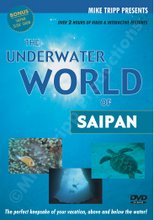
For more on the Grotto visit here and buy this DVD to see first hand the unique underwater world deserving of our protection.

Sunday, January 20, 2008

Governor signs International Year of the Reef proclamation

Saipan kicked off the International Year of the Reef on Friday when governor Ben Fitial signed the proclamation designating 2008 as the year of the coral reef!

As part of the proceedings government and non-government agencies dedicated to protecting the aquatic ecosystems were asked to set up displays to raise awareness about what we have and what each organization is doing to help protect our resource for generations to come.

Marianas Dive early birds, myself, Mark and Bruce were the first to arrive and set up, thus, the primo location next to the entry way and the food!

The proceedings got underway shortly after 9AM when Teny Topalian from NOAA introduced the dignitaries including Dr. Joyner from CRM who read the proclamation.


The proclamaition.....

Whereas, coral reefs are of outstanding beauty, have long been connected to our subsistence and culture, provide a home for thousands of reef organisms, are known for their medicinal value, protect our shoreline from large storms and erosion, provide the foundation for our eco-tourism industry, and

Whereas, coral reefs are threatened by human impacts such as improper watershed development, sedimentation, marine debris, nitrification from sewage discharge,
over-fishing, boat groundings and anchor damage, chemical spills and global climate change, and

Whereas, the CNMI government and numerous community based organizations have implemented projects to reduce the threat of human impacts such as marine monitoring, bio research, re-vegetation and tree plantings, community awareness and outreach projects, public service announcements, community forums and workshops, development and distribution of marine educational resource materials, and

Whereas, there continues to be a need to increase awareness and understanding of coral reefs and to further conserve and manage our valuable coral reefs and associated ecosystems, and

Whereas, we the people of the Commonwealth have a responsibility to protect our coral reefs for future generations,

Therefore, I, Benigno R. Fitial, Governor of the Commonwealth of the Northern Mariana Islands, do hereby proclaim 2008 as International Year of the Coral Reef. I urge all citizens to become aware, knowledgeable and action oriented towards the protection and conservation of our invaluable coral reefs.

In witness whereof, I have hereunto set my hand this 18th day of January 2008.


That's the governor above and the Lieutenant governor below giving his remarks about the value of our coral reefs. He was followed by a tag team state of the reef address by John Starmer of CRM (below) and Dr. Peter Houk from DEQ.

CRM, DEQ and DFW are the three main governmental agencies responsible for monitoring and enforcing the rules and regulations affecting our waters. These three agencies have rarely seen eye to eye, it was interesting that both DEQ and CRM scientists gave presentations but not so of DFW.
All in all, two solid presentations with a primary message of conservation in order to ensure future generations can count on the sea for years to come. Many aspects of coral reef ecology were discussed including pressures such as global warming, population increases, improved harvesting techniques and others. Possible solutions such as improved enforcement for, and expansion of, marine protected areas were presented.

Really the only disappointing thing about the event was the lack of people, specifically the general public and school kids attending. The crowd was made up mostly of employees from the government agencies closely involved with the reef, as well as the MHS My Wave club. It seems to me with such an important message AND the governor in attendance that there should have seen a much higher turn out. The TV press didn't even cover it and news photographers missed the actual signing! MVA did not have a single representative!

Above the lieutenant governor visits with members of My Wave club during one of the breaks.
Following the formal speakers the floor was opened to those wishing to give a personal testimonial about the reef. Lino Olopai is never one to pass on the opportunity to address a crowd and to speak about how things once were. Extremely proud of his Carolinian descent Lino is always quick to point out that in the olden days when only traditional fishing practices were used many of the concepts presented by the experts today follow models his ancestors adhered to many, many years ago. Things such as marine protected areas were known simply as areas you were not aloud to fish because an elder told you so. Things such as not fishing during the July full moon when the coral spawns were respected!

Unfortunately, the reality of today's Saipan is that there are many more mouths to feed and many different cultures trying to live off of the sea. Traditional fishing practices to one group may not be so traditional or have much meaning to others.

After the speakers and before lunch attendees had the opportunity to visit various displays set up around the theater.

DEQ's non-point source pollution model.
Kathy Yuknavage from CRM showing off her new zories and the next event in the line up of activities for IYOR 2008 - Take the Right Route day - March 7th - everyone is encouraged to car pool or use some other form of transportation and in general reduce your carbon foot print for the day.
She was very popular but not as popular as Nate the snake guy! 28-SNAKE. If you see a snake kill it! What's with the terrestrial guy getting all the traffic.

Next time were bringing in a live Whale Shark! We may not have had the same numbers as the snake whisperers but we did have interest in our booth and our group. Below, Joe Kaipat discusses things with Mark James of Underexposed. Mark's the one who did the Marianas Dive year to date slide show and made our booth what it was with all the great photographs!

The truth of the matter is the booth and the display really didn't get high reviews until Rose showed up! Here she is with her three Amigos. Mike, Mark and Dennis.


All in all a great job on getting the word out about this group and our goals to not only improve the dive destination but also to increase the awareness and ultimately the number of people who dive our waters including local kids.

Of course who could forget Mr. Bateman and a couple of hot chicks!

Wednesday, January 16, 2008

CAP - Conservation Action Planning

Angelo wrote an artical about this program today in the Saipan Tribune here.
Who's at the table. DFW, CRM, DEQ, NOAA, John Gonzales, Marians Dive, The Zoning department, The Nature Conservancy and RC&D.
That's Vanna Fran looking for a vowel!

As Angelo has pointed out, thankfully, the Coral Reef Initiative Policy Committee has chosen Laulau Bay as the highest priority conservation site on Saipan. This is a huge undertaking. Planning (and some action) has been going on for this site at various times in the 5 plus years I've called Saipan home. Unfortunately, there has been little success or movement in the right direction.

BCNMI and RC&D have done re-vegetation projects in the highlands aimed at reducing run off and sediment on the reef below. The bottom line is this project will take a lot of money, effort and creative solutions to solve the problems that exist. The overall importance of the Bay to everyone can not be overstated. For divers, fisherman, tourists, local medicinal products and endangered species (among others) the successful implementation of a solid plan is essential for survival. It's that simple! The plan and getting it done is not so simple.

A working mission / vision
Lau Lau Bay provides unique cultural, historical and environmental benefits and values: therefore, we pledge to restore and sustain its aquatic and terrestrial ecosystems and resources above and below the waves

After the first morning alone I am very happy that I've attended this working group. Without a divers perspective this process would be much more difficult to get it right. At least that's how this diver sees it. Lau Lau Bay to the dive industry here is very important and the dive industry provides one of the biggest revenues to the tourism industry the current economic engine. Having said that it is also a very important fishing and traditional cultural area so balance is the key. That's why this must be a group effort that brings together ideas and efforts from everyone.

It has been a fun morning working and listening to others who are devoted, for one reason or another, to the success of Lau Lau Bay.

Tuesday, January 15, 2008

CNMI De-Lurk

Boni Gomez says that anybody who visits any Saipan Blog this week has to leave a comment every time they visit. She's calling it the Great CNMI De-Lurk.

As Boni put it...
"Jan. 14-18 marks the first ever Great CNMI De-Lurk! Go ahead, take this banner and put it on your blog. Then, open the floodgates and invite all those lurkers out there to make their voices heard".
So in the spirit of the event, if you'll play the game, I even promise to respond to your comment! Something I've not been doing enough of - bad blogger am I.

Let me know what you like and don't like and if I can make the change I might just do it!

Sunday, January 13, 2008

Lieweila - Required viewing!

Whether you’ve lived here all your life, for a few years, or have not yet set foot on the island but intend to arrive soon, you need to watch this DVD.


I hated history in school. I hated reading the big, thick, boring text books while trying to remember dates, and names. Perhaps it was the method of teaching as I’ve now come to realize that I’m a very visual and hands on person. As a kid at least, it never really seemed important to go back and look at how things once were, the past didn’t seem to have much relevance. It is also awfully hard to learn anything when doing the head bob and textbook drool!

Now, as an adult living in an area of the globe that has played such an enormous role, especially when it comes to charting the course of the modern world, I see the importance of the past and it’s effects on daily life here.

As I finished watching Leliewia I couldn’t help but have one thought in mind.

Thank you. Thank you Cinta for telling your story and giving everyone, especially us foreigners, a much better understanding of how things have come to be. Within the Northern Mariana Islands, Saipan at least, has become a melting pot of cultures. Located in the Western Pacific its colonist past and numerous occupying powers have created a living experience unique to none I’ve experienced in all my travels.


As in any multicultural society there will always be differences of opinion and problems as a result. This is especially true in a society that has endured multiple takeovers and an influx of numerous cultures in a relatively short period of time. Compounding the situation here is the relative isolation offered by miles and miles of deep blue sea and the small landmass upon which everyone is asked to inhabit cohesively. Saipan is after all only 5 miles wide by 25 miles long yet nearly 60,000 people call it home at any one time including some who've never ventured off the island.

To truly understand the problems faced today I believe it would be wise for everyone who has not yet done so to familiarizing him or herself with the islands past. This is especially true of those who may have, or wish to have, a role in shaping the future of the Commonwealth.

This DVD is a great starting point and provides a succinct historical summary. Although primarily the Carolinian perspective it gives insight into how present issues have deep seeded roots in the past and how devastating and difficult it is to overcome the distrust that accompanies colonization and the imposition of ones beliefs on others.

It also illustrates how important it is to stand up and preserve the indigenous culture despite outside influences. Unfortunately, as the film discusses the loss of pride in ones culture is a sure recipe for its ultimate demise. In my opinion the long-term economic survival of these islands depends heavily on keeping the Carolinian and Chamorro cultures alive. Tourists will always be attracted to something they don’t have at home.

Additional views and thoughts by others here and here. Buy the DVD here.

Saturday, January 12, 2008

Rare Fish Part 2 - Ranzania laevis

Photo by Jacqueline Hernandez

An Update on the "rare" fish story in the Tribune.

According to Mike Trianni from Fish and Wildlife the large fish pulled from the beach in Chalan Kanoa last week was a Slender mola (Ranzania laevis) one of three species in the family Molidae or Sunfish.

The family Molidae has three distinct species. The Common Sunfish or Mola mola, the Sharp-tailed mola or Masturus lanceolatus and the Slender mola or Ranzania laevis.

These giant ocean sunfishes are some of Earth’s most fascinating yet mysterious creatures. As jelly-eating giants they hold the record for being the world’s heaviest bony fish and occupy a unique place in the open ocean web of life.

Of the three the Slender mola is the smallest and most colorful. They rarely get larger than a few feet while the common Mola mola averages about 6ft and 2000lbs with the largest recorded coming in at nearly 5000lbs!

The word mola comes from Latin and means milestone-in reference to these fishes' roundish shape. The common name "ocean sunfish" comes from the Mola mola's habit of lying atop the surface of the ocean appearing to sunbathe.


The Slender mola (Ranzania laevis) eat an assortment of crustacean, fish and molluscs including myctphid larvae, hyperiid amphipods, crab megalops, crab zoea and pteropods. Most feeding appears to take place within 150m (500 ft) of the surface. (Fitch, 1969)

All three species of sunfish are found in all tropical and temperate oceans. The slender mola is considered uncommon here in the Northern Mariana Islands.


Please visit the Ocean Sunfish dot org site for more information. Much of what is written here is adapted from this site.


Rare Fish

This morning the Saipan Tribune is reporting that a rare fish washed up on the beach in Chalan Kanoa.

Photo by Jacqueline Hernandez

It will be interesting to see what Fish and Wildlife has to say about this. Whether its appeance can be attributed to changes in climate, water temperature or something else.

When you live in a part of the world that has the deepest water anywhere on the planet and the archapelego we call home makes up the Northern most border of the Coral Triangle it should come as no supprise that our waters are home to rare and crazy creatures.

Just ask Harry and his nudibranchs or go for a dive at Lau Lau Bay and you'll see bizar and wonderful stuff!

Stay tuned for more on this one!

Friday, January 11, 2008

I'm a big sister now!

A great book and a great time of life.

Not quite the same adrenaline rush the second time around - at least for Dad!
But, I now see how each time is memorable in its own way.
As with everything in life, accepting what it is and embracing what is special is key.


This time around, among other things, it's been absolutely amazing watching big sister. For now at least, I'm thinking two years apart is just about right!

If you've got one (a kid that is) and planning on another - buy the book!
I'm a Big Sister Now.

Tuesday, January 8, 2008

Carson William

At 6:45 AM life got that much more interesting today.
It's daddy time again! This time to one Carson William Tripp, 6lbs, 15oz!

Mom, baby, big sister and Dad are all doing great!

More later - but have you ever wondered what it's like to have a baby at the Commonwealth Health Center? As with most things on Saipan there's the good and the not so good!
A memory and perhaps a story or two in there for sure!

Day one of open water!

Saturday, December 22, 2007

Rotary Manamko Thanksgiving Lunch

Wow, it's been a while. I guess I started taking a break before all the other Saipan bloggers decided to make it fashionable!
It's been a busy month, I've got some catching up to do and a few posts to write that have been brewing in my head for a while now.
I'll start here, the first photos in my library following the the Sugar Dock Clean UP!
The Wednesday before Thanksgiving saw the Rotary Club of Saipan do what they've done every year for a while now and that is host a lunch at the Manamko center. This year was my first year to do this and I got a real kick out of just how happy everyone was to get their picture taken.

After a few opening remarks the food was dished out and everyone chowed down! Then it was on to a few more speeches and BINGO!

I enjoyed capturing some candid shots of unsuspecting elderly folks as they waited for the next number to be called. Judging by the smiles I got after the flash gave me away and the requests for additional photos I'd say everyone had a good time!